New PaNDiv Postdoc position!

Postdoc position in coexistence and biodiversity synthesis at the University of Bern

Applications are invited for a three-year postdoc position, ideally starting in December 2023 or January 2024, to work with Prof. Eric Allan, at the University of Bern in Switzerland. The position is at 80-100% employment.

Understanding plant species coexistence and effects of biodiversity on functioning are key goals of community ecology. However, although related, the two fields have rarely been integrated. We are looking for a postdoc to address this by doing synthesis analysis in the PaNDiv biodiversity experiment.

The PaNDiv experiment (https://allanecology.com/projects/pandiv/) is a large biodiversity experiment in Münchenbuchsee near Bern in Switzerland. It manipulates plant species diversity, plant functional composition, nitrogen addition and fungal pathogen reduction with fungicide. It has been running since 2016 and has collected annual time series of plant biomass, fungal infection and plant nutrient data, together with changes in plant abundance in weeded and unweeded plots. In addition, a wide range of ecosystem functions and the diversities of several groups of organisms have been measured. Further, we have measured competition between all species in the experiment, allowing coexistence mechanisms to be estimated.

The postdoc will work on analysing the large datasets collected in the experiment. For instance, they could examine links between coexistence and biodiversity mechanisms, community reassembly and ecosystem functioning, the stability of ecosystem functioning over time and ecosystem multifunctionality.

We are seeking highly motivated applicants interested in plant community ecology, coexistence theory and biodiversity-functioning research. Applicants must hold a PhD degree in ecology. Strong analytical and data handling skills are required, together with excellent oral and written communication skills in English.

The postdoc will join the community ecology group (https://allanecology.com/) at the Institute of Plant Sciences in Bern, which offers a stimulating, international research environment and excellent facilities (http://www.ips.unibe.ch/). They will work closely with a PhD student on the PaNDiv experiment and will collaborate with Oscar Godoy (CSIC Seville) on the coexistence analyses.

Please send your application by email (as a single PDF) to eric.allan@ips.unibe.ch. Applications should include a CV, names and addresses of two references and a one-page cover letter outlining your motivation for the position and research interests. Applications will be reviewed from 9th October 2023 until the position is filled.

For queries on the application process or more information on the position, please contact Prof. Eric Allan eric.allan@ips.unibe.ch

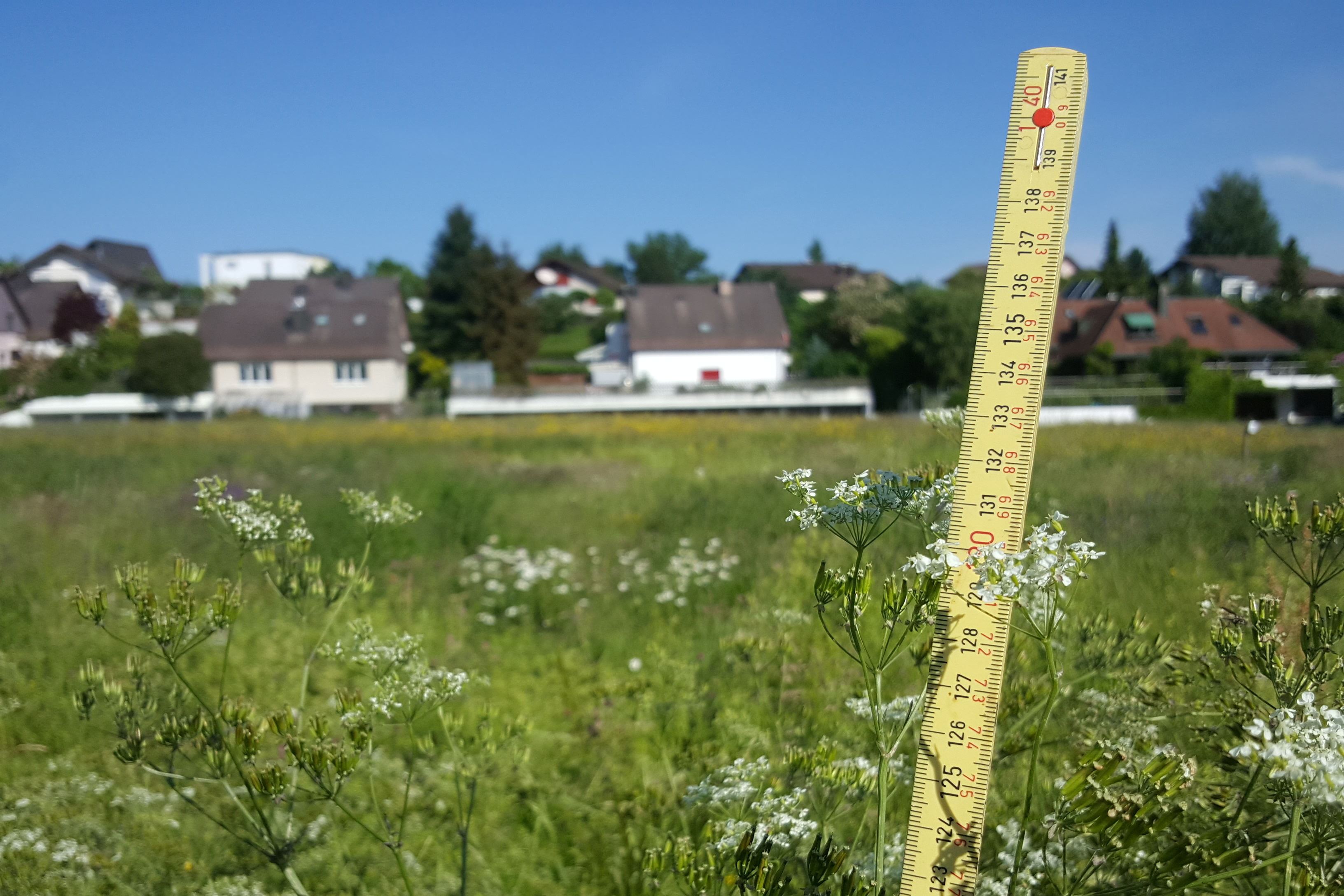
The PaNDiv Experiment in Münchenbuchsee, near Bern in Switzerland. Picture by Hugo Vincent.

Allan Ecology Group at INTECOL2022

After a few years of postponements and delays due to the Covid pandemic, INTECOL2022 was finally held in Geneva in September, bringing together ecologists from across the globe to share research on applied and fundamental questions in many areas of ecology. This breadth of research was demonstrated in the 50 sessions held at INTECOL including topics such as biodiversity, ecological mechanisms across scales, climate change, restoration, plant-enemy interactions and more.

It was great to be able to attend an in-person conference again! INTECOL 2022 had some really interesting talks, I especially enjoyed the theoretical discussions with the plenary talk by Peter Chesson and also the talk on eco-evolutionary effects on species coexistence by Vasco Lepori. Discussions around experimental results were also enriching, especially the impressive presentation from Zoe Xirocostas on how introduced plant change their interactions with enemies in their new ecosystem. – Caroline

I really enjoyed having a chance meeting and talking to many people at the INTECOL 2022 conference who are working in different aspects of ecology. The talks in the “Plant-enemy interactions in a changing world” and “Land use and biodiversity” sections were the ones I liked the most and therefore it would be difficult to pick one or two. It was very nice to not only share our work but also have a social life with other people in different countries called pandemic PhD. Thu Zar Nwe

For me, the best experience was the sheer wealth of inspiration, the opportunity to meet so many creative and enthusiastic but also busy researchers, in an environment where we all finally had time to share. I can’t remember how many times I thought “Ecology is just great!” I was especially deeply impressed by the work of several female early-career scientists, so many great role models for the future! The only downer was the question of how many colleagues stayed away from Switzerland for financial reasons. Wishing them the same feeling of being part of a large research community. – Noëlle Schenk

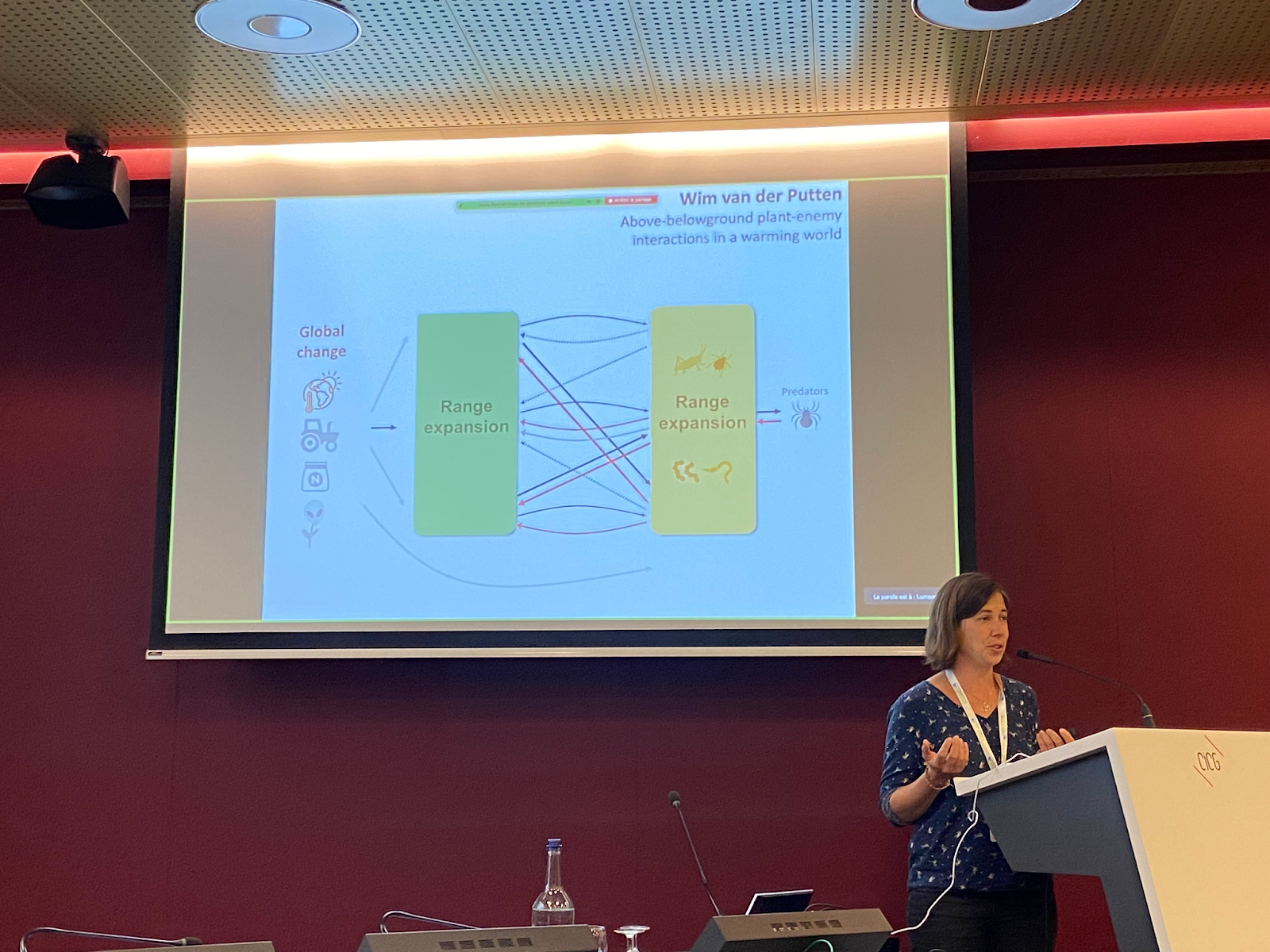
The Allan Ecology group was very involved in the conference including the organisation of a session by Eric, Anne, Gemma and Suz titled Plant Enemy Interactions in a Changing World. This session drew a number of big names in plant-enemy ecology as well as many emerging early and middle career researchers. All in all, it was a really interesting session to attend with new information, methods, data and a lot of interesting discussion. We finished the session with a dinner and drinks with all the speakers from the session which was a great time to keep chatting about ecology after many years of not seeing our international colleagues in person! You can see a thread that summarises all of the talks from this session on Suz’s twitter, complete with pictures of all the fantastic speakers!

The title for our exciting session on plant-enemy interactions
Dinner and drinks in Geneva with so many wonderful ecologists, some of whom we hadn’t seen in years!

Our team also contributed 5 talks to the conference. Eric and Anne presented an overview on the current state of knowledge of plant-enemy interactions and what the next big questions in this important ecological area may be. Suz presented preliminary results from the BugNet project in the same session (Plant Enemy Interactions in a Changing World) where many BugNet collaborators were in attendance and could see their data contributing to this exciting global study.

Eric and Anne giving their joint talk on the current field of plant-enemy interactions and what future research is needed

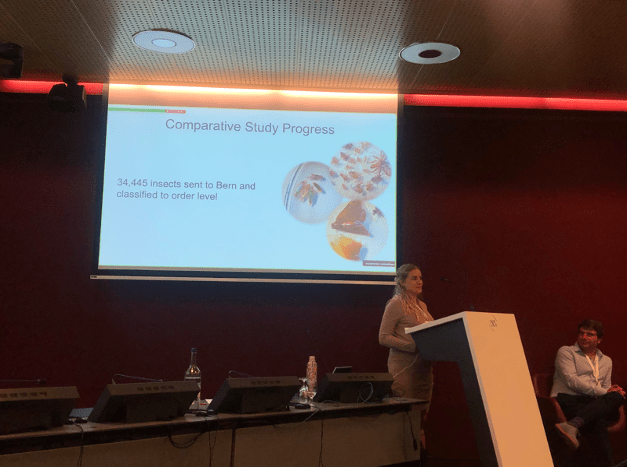
Suz presenting preliminary research on the BugNet

Thu Zar presented research from her PhD on how collembola communities and their functioning eg. mandible traits are driven by variable factors, which are altered by nitrogen addition directly and indirectly. Caroline also presented research from her PhD on how nitrogen and fungicide addition impact plant species competition networks, a study using competition matrices parametrized with data sampled on the PaNDiv experiment. And finally, Noëlle gave an excellent talk on her research from the Biodiversity Exploratories on how beta-diversity of multiple trophic groups and land-use intensity drive different grassland locations to provide distinct sets of ecosystem functions.

Thu Zar presenting research from her PhD that looks at Collembola in the PaNDiv Experiment
Caroline presenting her PhD research on plant competition in the PaNDiv experiment
Noëlle presenting in the big auditorium! Sharing results from her research in the Biodiveristy exploratories

The group also had time to attend field trips at the conference including an excursion to the mountain pasture of Chênex (Salève, France).

Enthusiastic poster presentation by Ralph Bolliger about his work on the effect of land-use intensity on grassland plant communities.

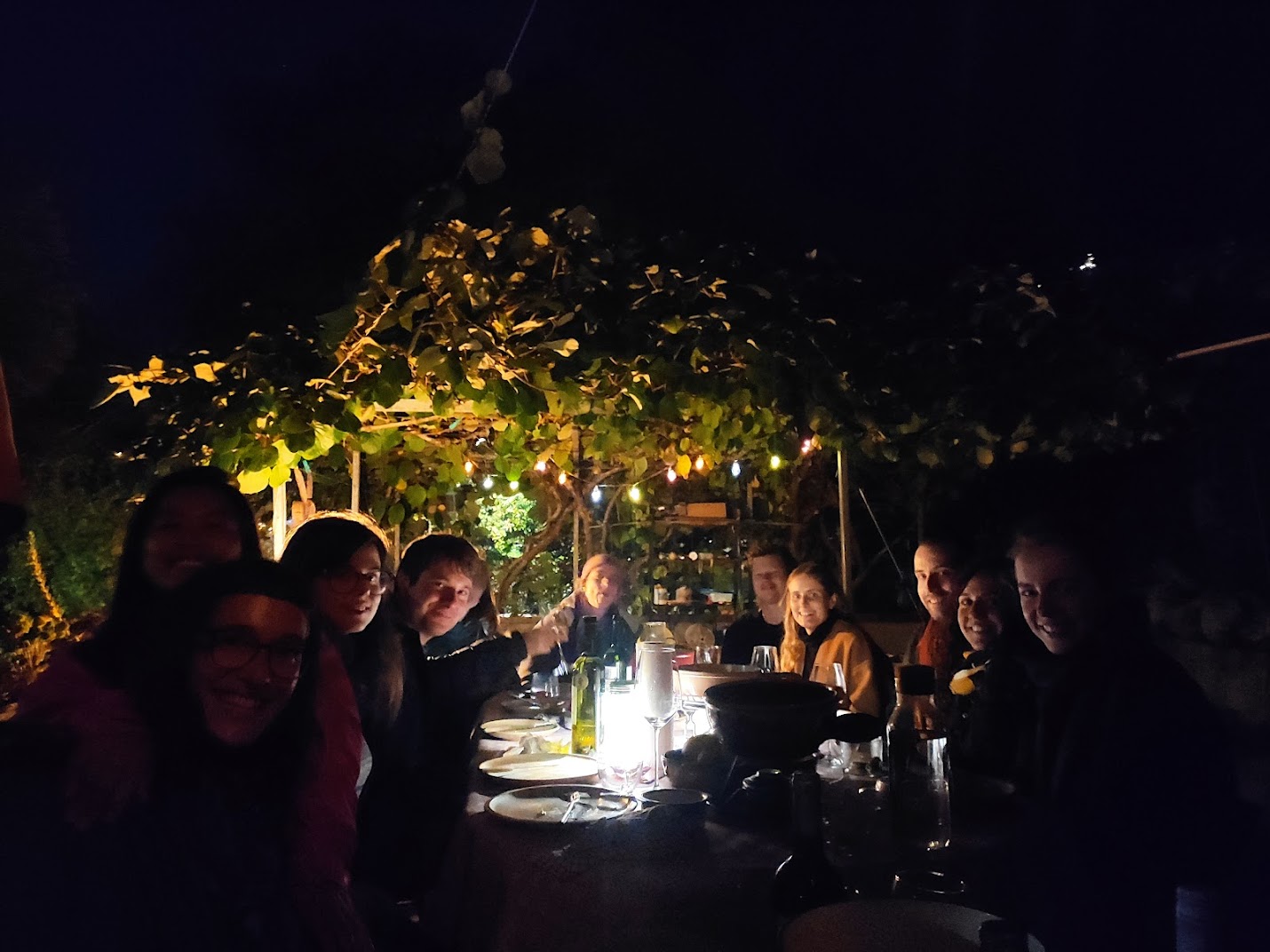
Fondue night!

The Allan Ecology Lab had a lovely Fall social event this October with a group outdoor fondue night. Loads of delicious swiss cheese, bread, potatos were devoured and of course paired with some lovely wines!

Fieldwork season wrap up

1_sheep

The sheep are now back next to the PaNDiv field site, which means two things: winter is coming, and after a season outside the fieldwork is over!

Maintaining the experiment has already kept us quite busy over the last months: weeding three times the whole field to always have the same diversity in the plots, spraying fungicide for the pathogen exclusion treatment and fertilizing to study the effects of Nitrogen addition.

On top of that, we harvested this year again a lot of data. For all our species, we quantified fungal pathogen infection, looked at herbivory damage and measured classic functional traits (height, SLA, LDMC, etc). We assessed the percentage cover of all plant species growing on the field, and collected over 3000 biomass samples and 30 000 insects. This year we had a closer look at the belowground compartment, measuring soil respiration regularly and collecting more than 1000 soil samples.

We also welcomed researchers from other universities to collaborate on the PaNDiv project. Rodrigo Granjel (1), PhD student from Sevilla, Spain collected data to study coexistence mechanisms. Bjarke Madsen and Urs Treier (2) from Aarhus, Denmark, flew their drones over the field, to link ground measurements with remote sensing data.

In our greenhouses facility, we grew the 20 PaNDiv species and the most common weeds invading the plots with an N addition treatment, to get an array of functional traits in controlled conditions. We also used this opportunity to explore the variability and the response of morphological traits, for instance related to vegetative propagation, together with Mathieu Millan, a researcher in plant architecture from Montpellier, France

We couldn’t do that much without a dedicated team of PhD, Master students and technicians, and all our hard working field helpers. More than 50 different people came to work with us between April and November, thank you!

Now it’s time to process all these samples, analyse the data … and get ready for next fieldwork season!

(1) http://www.oscargodoy.com/
(2) https://twitter.com/UAS4Ecology

2_start
March, a cold start of the fieldwork season

3_bigplants
In June the plants have grown big

4_fungicide
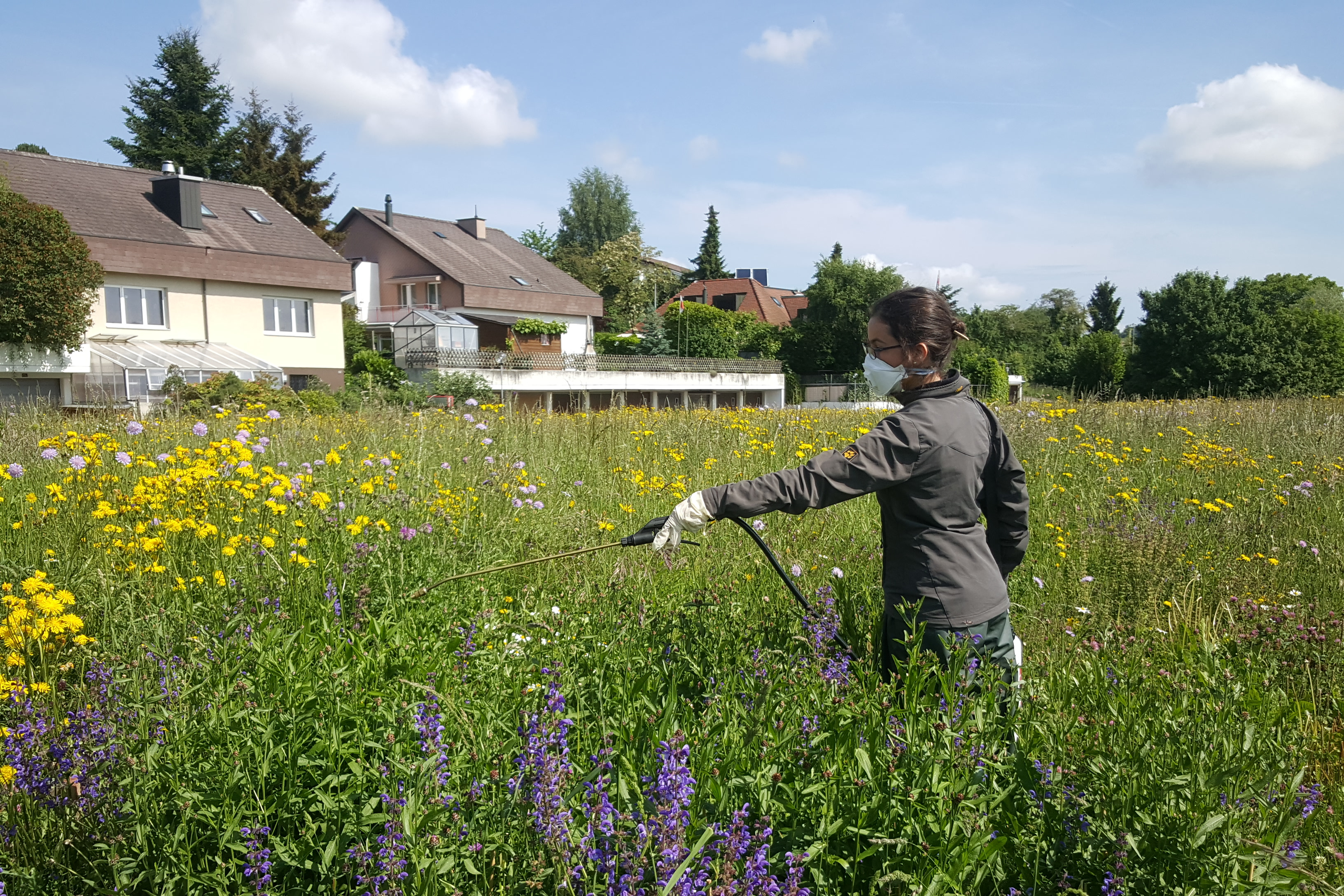
Spraying fungicide to study the effects of pathogen removal

5_weeding
July, second weeding of the whole field

6_biomassaug
Biomass cutting (photo Beatrice Schranz)

7_insectsampling
Collecting insects with suction sampling

8_graphosomaitalicum
Graphosoma italicum, one of the many insects found on the field (photo Tosca Mannall)

9_soilsampling
Autumn soil sampling

PaNDiv-ing in China

I recently arrived in China for a two months research stay as part of my PhD in the PaNDiv project. PaNDiv is a large grassland biodiversity experiment in Bern, established in 2015. We manipulate biodiversity, functional composition, nitrogen and foliar fungal pathogens. I study the role of fungal pathogens in this grassland. Soon after I started my PhD, I found Xiang Liu and the research group of professor Shurong Zhou because of two amazing papers about fungal pathogens and nitrogen enrichment in grassland. This sounds like PaNDiv, but in China instead of Switzerland. Excitingly their results point in a similar direction as our preliminary analysis for the PaNDiv Experiment, with faster growing plant communities under nitrogen fertilization showing higher infection levels than slower growing ones. This indicates that we are on the trail of universally valid patterns (at least for grasslands) and just screams for collaboration and measurements to make our results more comparable. The Young Academic Support of the University of Bern allows me to travel to China, learn new ways of measuring fungal infection and measure plant traits related to their growth strategy to link this to fungal infection. Before I “PaNDived” into field work on the Tibetan High plateau, I stayed a few days in Shanghai, to get to know the research group. Xiang already gave me a very warm welcome (haha warm: its 35°C outside and very tropical). An update about field work in China will follow soon.
photo5980953796513214058
the view from my current home

Our community ecology group at University of Bern (led by Eric Allan) works on two interlinked questions: what maintains diversity within plant communities? And what effects do changes in community diversity have on the functioning of ecosystems and the services they provide?
We try to understand the biodiversity of plant communities from several different angles and we do experiments in the field and greenhouse and use statistical modelling to test these questions in large datasets.
On our website you can find more information on the major projects we are involved in, together with updates on our activities and interests.

We are based at the Institute of Plant Sciences and are also affiliated with the Centre for Development and Environment.